AI for Small Business: From Staff to Solo
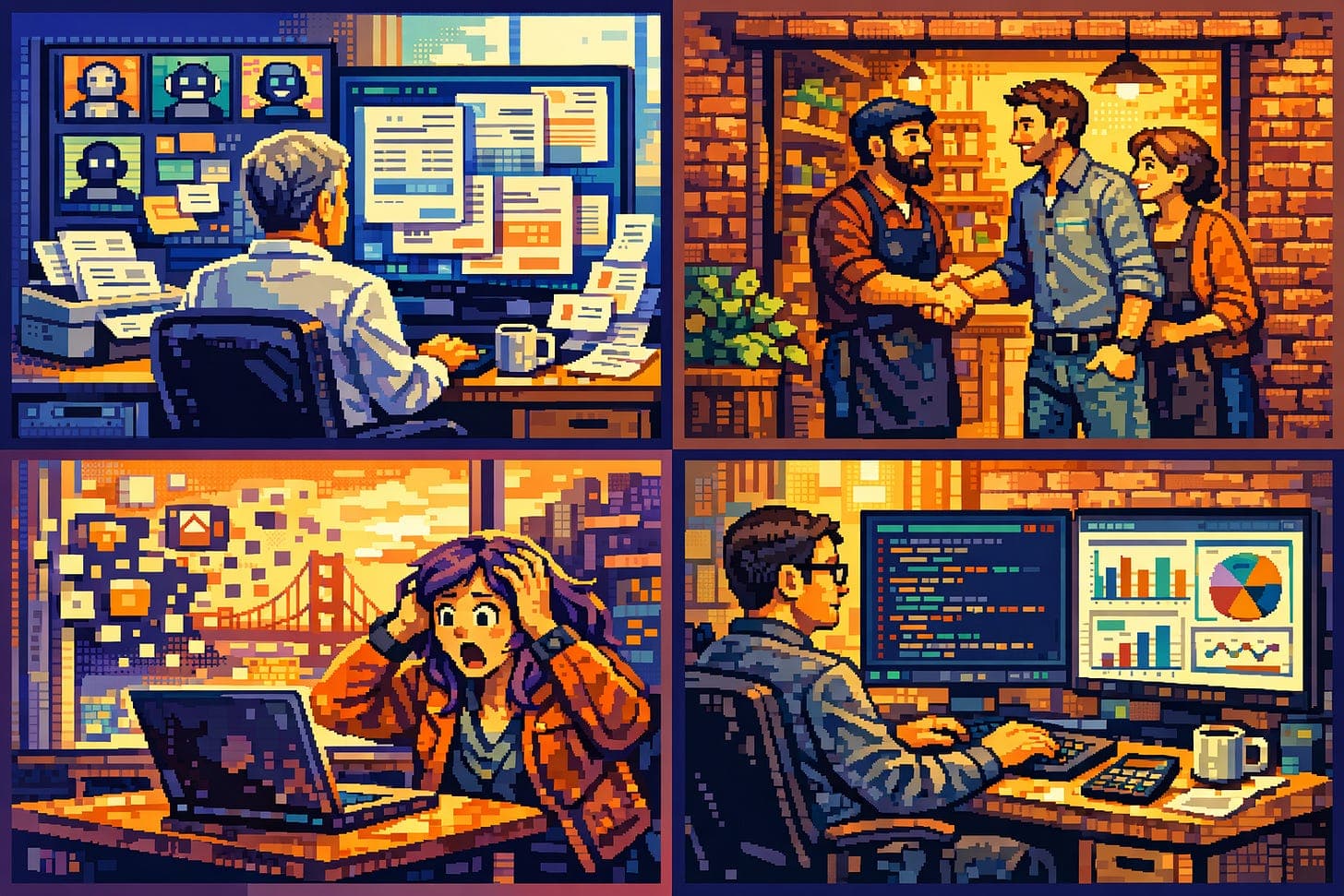
Welcome back to AI for Small Business! This month, we’re seeing a fascinating shift: small business owners aren’t just using AI tools anymore—they’re building AI-powered businesses that run without traditional staff. From solopreneurs replacing entire teams to service businesses discovering what survives the AI wave, here’s what’s working on the ground.
🚀 I quit my VP job at 36 to become a solopreneur. I don’t need staff: AI agents handle everything from invoices to proposals.
Justin Parnell walked away from his VP role to build something remarkable: a business that runs entirely on AI agents instead of employees. His company, Justin GPT, creates custom AI agents for other businesses, and he’s proven you can scale without traditional hiring headaches. If you’ve ever wondered whether AI can actually replace the administrative burden of running a team, Justin’s approach shows exactly how to structure a business around AI-first operations. This isn’t theoretical—it’s a working model you can study and adapt.
🏪 After the exit: High-tech hustle meets Main Street for this former startup CTO
Artur Meyster took his startup experience and applied it to something delightfully ordinary: a struggling Miami laundromat. By adding AI receptionists and Uber integration, he transformed a 2-star business into a 4.9-star service that just sold to a 15-location chain wanting to scale his playbook. This story matters because it shows how AI isn’t just for tech companies—traditional service businesses can use these tools to create competitive advantages that bigger players want to acquire. Sometimes the best opportunities are hiding in plain sight on Main Street.
⚡ ‘I woke up today and Claude killed my startup’: San Francisco founder after her product becomes obsolete
Ira Bodnar’s wake-up call is every AI-adjacent business owner’s nightmare: her startup became obsolete overnight when Claude added competing features. But her experience offers crucial insight into which business categories will survive the AI wave and which won’t. If you’re building any kind of AI-powered service, her hard-learned lessons about defensible versus vulnerable business models could save you months of work in the wrong direction.
💼 Built real internal tools for my CPA firm with Claude Code — how do we go from scrappy to production-ready
This CPA firm CEO built game-changing internal tools without being a developer, using Claude Code to create everything from journal entry imports to Excel plugins that auto-pull financial reports. His 19-person team now uses these tools daily, and several staff members are using Claude to increase their output by 2-10x. He’s facing the classic “scrappy versus production-ready” decision, and his experience shows both the promise and practical challenges of building your own AI tools versus buying them.
🤖 Beyond the AI Chatbot Hype: Why We Built a Hybrid Agent Instead of Buying One
After evaluating every major chatbot platform and finding price tags of $1,500+ monthly, this business owner built their own hybrid solution for just $50 per month. Their honest breakdown of the chatbot market reveals why most SaaS options fail small businesses and what actually works when you need customer service automation that doesn’t break the bank. If you’ve looked at AI customer service tools and been shocked by the pricing, this approach might be your answer.
🎯 How do we actually get AI agents to recommend our businesses? My messy 3-step experiment so far.
This local service business owner is ditching traditional SEO to focus on what she calls “GEO”—getting AI agents like ChatGPT and Perplexity to actually recommend her business. Her three-step approach involves creating “Knowledge Snippets” instead of keyword-stuffed content and restructuring her website to read like a database rather than a marketing brochure. Early results suggest this strategy is working, and it might be the future of how small businesses get discovered online.
🎩 I Turned Claude into an Executive Assistant. Here’s What Happened
Will runs two businesses solo and was drowning in operational tasks until he built what he calls an AI coworker for $210 monthly. This isn’t about individual AI tools—it’s about creating a system that understands your full business context and can execute plans independently. His detailed breakdown shows exactly how he moved from being consumed by managing work to actually thinking strategically about his businesses again.
The pattern this month is clear: the most successful small business owners aren’t just using AI—they’re rebuilding their entire operational model around it. What’s your next experiment going to be?